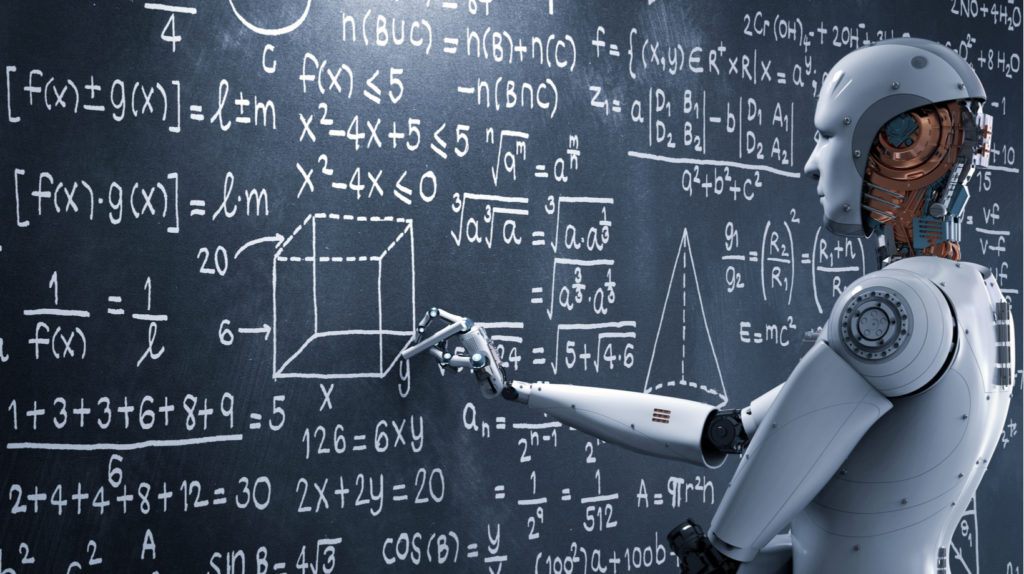
From personalized simulations to intelligent tutoring systems, artificial intelligence is reshaping the science classroom — and the results are hard to ignore.
AI tools in science education are fundamentally transforming how students learn and how teachers instruct. Not long ago, teaching science meant textbooks, chalk diagrams, and the occasional baking soda volcano. Today, a student in rural India can simulate a supernova, a teenager in Brazil can watch protein folding in real time, and a struggling ninth-grader can receive a lesson on photosynthesis pitched precisely at their level — all powered by artificial intelligence. The transformation is profound, and it is only accelerating.
These AI tools in science education are no longer a futuristic concept discussed in class. They have become the invisible infrastructure of how science is taught, learned, and explored. From adaptive learning platforms to AI-generated lab simulations, educators worldwide are discovering that these tools do not replace the human teacher — they amplify what that teacher can do. To understand this shift better, explore how Education Week covers AI in schools and what leading researchers say about its classroom impact.
AI tools in science education: Personalized Learning at Scale
Adaptive Platforms That Meet Students Where They Are
One of the greatest challenges in science education has always been the wide range of prior knowledge students bring into a classroom. A single teacher facing thirty students cannot simultaneously address foundational gaps and push advanced learners further. AI tools in science education change this dynamic entirely.
Platforms like Khan Academy’s Khanmigo, Socratic, and Carnegie Learning now use large language models to continuously assess a student’s understanding and adjust the difficulty, pace, and style of instruction in real time. If a student stumbles on the concept of covalent bonding, the system identifies the gap, revisits atomic structure, and scaffolds the student back up — without embarrassment, without waiting for the next class period.
“AI doesn’t get impatient. It doesn’t move on when one student is confused. That patience is transformative in a subject as layered as science.”
AI Tools in Science Education: Natural Language Tutoring
AI tutors now allow students to ask questions in plain, everyday language and receive clear scientific explanations instantly. A student confused about why ice floats on water can get a nuanced, age-appropriate answer at midnight, when their teacher is unavailable. These systems track which concepts repeatedly confuse a student, building a rich learning profile over time and flagging it for the human teacher to review. According to UNESCO’s AI in Education framework, personalized AI tutoring is among the most impactful EdTech interventions of this decade.
Virtual Labs and Immersive Simulations
Democratizing Access to Laboratory Experiences
Laboratory work is the heartbeat of science education. But not every school has a functioning chemistry lab, a microscope for every student, or the budget for biological specimens. AI-powered virtual labs are levelling the field in ways that were unimaginable a decade ago.
Virtual Labs and Immersive Simulations Powered by AI
Democratizing Access to Laboratory Experiences
Laboratory work is the heartbeat of science education. But not every school has a functioning chemistry lab or a budget for biological specimens. AI tools in science education are levelling the field in ways that were unimaginable a decade ago through virtual lab environments.
Tools like Labster and PhET Interactive Simulations offer photorealistic environments where students can run titration experiments, dissect virtual frogs, or observe the behaviour of gases at extreme temperatures — all with zero risk of a broken beaker or a wasted chemical.
Visualizing Invisible Scientific Phenomena
Some of the most important concepts in science are invisible to the naked eye — electromagnetic fields, DNA replication, tectonic movement. AI image and simulation generation now allows teachers to create custom, accurate visualizations of these phenomena on demand, tailored to the exact topic of the day’s lesson.
How AI Tools in Science Education Empower Teachers
Reducing Administrative Burden
A significant portion of a science teacher’s week is consumed by tasks that have nothing to do with teaching: grading lab reports, writing differentiated assessments, responding to routine parent queries, and generating lesson plans aligned to curriculum standards. AI tools are absorbing much of this administrative weight, freeing teachers to do what they do best — inspire curiosity, facilitate discussion, and mentor young scientists.
Data-Driven Insights for Classroom Strategy
AI analytics dashboards now give teachers a granular view of class-wide understanding in near real time. A teacher can see, before tomorrow’s lesson, that 60% of their students did not grasp osmosis — and adjust accordingly. This kind of insight previously required weeks of manual tracking. Now it is available overnight. Read more about this on our article on data-driven teaching strategies for science classrooms.
Challenges of AI Tools in Science Education
Equity, Access, and the Digital Divide
For all their promise, AI tools in science education are not yet equitably distributed. Schools in low-income areas often lack the devices, bandwidth, or teacher training required to implement these platforms. Policymakers and ed-tech companies must treat equitable access as a prerequisite, not an afterthought. The OECD Digital Education Outlook highlights this gap as one of the most urgent priorities in global education policy.
Preserving Critical Thinking in Science Learning
There is a deeper pedagogical concern. Science education is not merely about correct answers — it is about learning to question, hypothesize, and tolerate uncertainty. Teachers must deliberately design moments of friction: open-ended inquiry, debates about contested findings, and problems that AI cannot neatly resolve. Explore related thinking in our guide on inquiry-based science teaching methods.
“The goal was never to produce students who can retrieve facts. It was to produce students who can think like scientists. AI must serve that goal, not shortcut it.”
The Future of AI Tools in science education
What the Next Decade Will Bring
The next frontier in AI tools in science education involves multimodal AI — systems that can interpret a student’s hand-drawn diagram, listen to their verbal explanation of an experiment, and provide feedback across all channels simultaneously. We may also see AI co-designing curriculum with teachers, suggesting inquiry-based units grounded in real scientific datasets from NASA, CERN, or the WHO.
The classroom is changing. The question is not whether AI will be part of science education — it already is. The question is whether educators, institutions, and policymakers will shape that change with wisdom, equity, and a clear sense of what science education is ultimately for: producing curious, rigorous, and ethical thinkers who will face challenges we cannot yet imagine. To stay current, follow updates from the International Society for Technology in Education (ISTE).